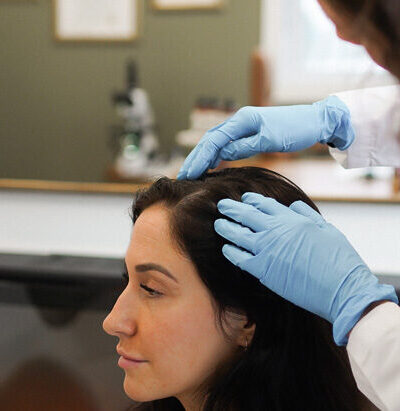
In 95% of cases, hair loss in men is related to genetic factors. Are you concerned about your hereditary predisposition? We can help you. It is possible to prevent and slow down hair loss in men due to baldness. Our certified trichologists are specialists in male hair loss and baldness cure. Don’t wait any longer to consult us!
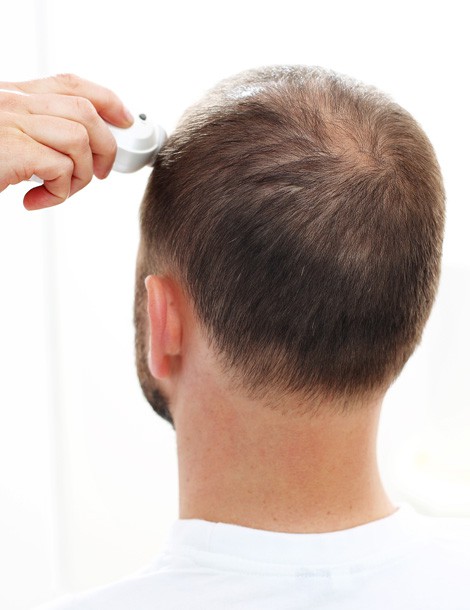
Causes of Hair Loss
Hair loss in men generally begins in their mid-twenties and continues gradually as the years go by. By the age of 50, 60% of men are facing this problem. The earlier you act by consulting a professional and by adopting good hair hygiene, the longer you will keep your hair.. Prevention is the key!
Male pattern baldness, also called male androgenetic alopecia, is generally linked to an increased level of dihydrotestosterone (DHT). This excess of male hormones clogs and suffocates hair follicles. This results in progressive hair loss.
Apart from family history, which is an essential factor in the diagnosis, other causes may be considered: stress, nutritional deficiencies, as well as drug treatments, and also the use of scalp aggressive shampoos and products.
You can rely on the Hair Health Center to offer you effective and efficient customized solutions to prevent, control and cover up baldness and hair loss.
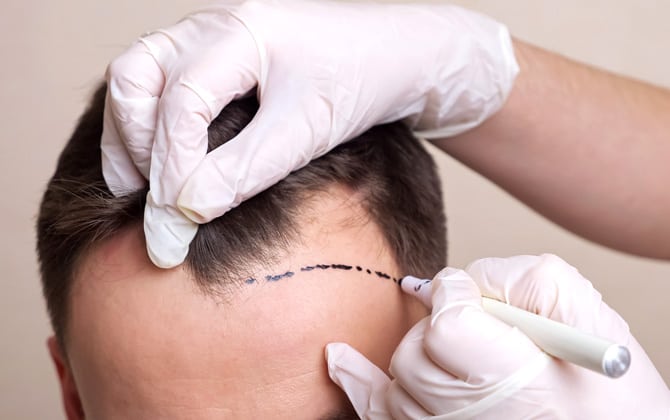
The Stages of Male Pattern Baldness
Research and observations show that hair loss due to baldness evolves in stages.
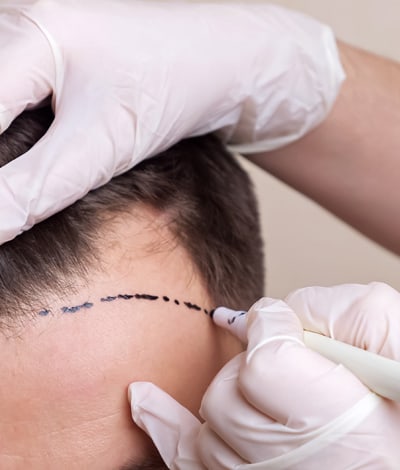
- It usually begins on the forehead and temples.
- It then progresses towards the back, and a hairless area forms at the top of the head, also called the vertex.
- Gradually, the top of the head becomes completely smooth.
- Eventually, only a crown of hair remains around the head.
Baldness in men generally follows this pattern. However, the rate of progression from a bald spot to a full-blown baldness varies greatly from one person to another.
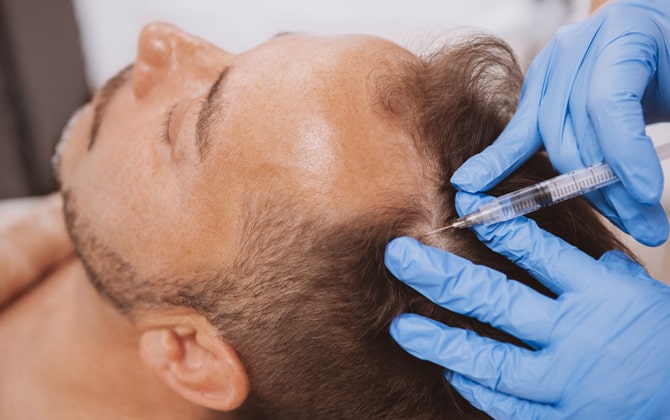
Hair Loss Solutions for Men

Since 1976, the Hair Health Center has been known as the benchmark on the North Shore. Our approach is based on prevention, hair health and the balance of your hair cycle. Let our team of experts in baldness cure and hair loss in men guide you towards the best treatments and solutions for you.

Under Medical Supervision
Dr. Véronique G. Dorval and Dr. Jessica Chbat offer medical consultations for hair loss at the Hair Health Center. They also supervise PRP treatments and hair transplants. The cost of the consultation is $350 plus tax.
Male Hair Loss: Frequently Asked Questions
How do I know if I’m starting to go bald?
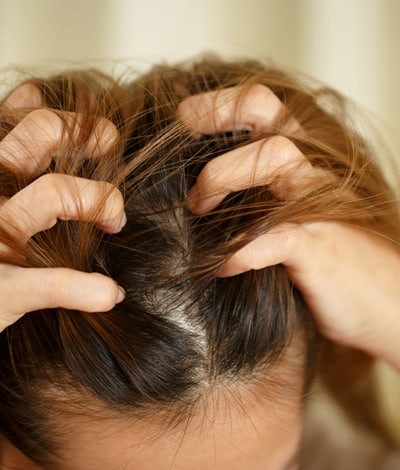
Early signs of male pattern baldness may include receding temples, thinning at the crown or a gradually receding hairline. Because every situation is different, a personalized assessment helps confirm what’s really happening and identify the best course of action.
At what age does male hair loss start?
Hair loss can begin as early as your 20s, although it varies widely from person to person. Some men notice early changes, while for others, hair thinning develops later and progresses more gradually.
When should you be concerned about hair loss in men?
You should consider consulting if hair loss accelerates quickly, ifthinning becomes uneven or patchy or if scalp irritation or discomfort appears.
If hair loss is affecting your daily life or confidence, know that you don’t have to go through it alone. Professional guidance can help you better understand your situation.
Do hats cause baldness?
No. Wearing hats or caps does not affect hair follicles.
Male hair loss is primarily influenced by genetics and, in some cases, lifestyle factors.
How can you slow down hair loss in men?
Early action is often the most effective. Depending on the cause, solutions may include scalp care treatments, follicle stimulation therapies or adjustments to your hair care routine.
Advanced treatments such as PRP (Platelet-Rich Plasma), Alma TED, low-level laser therapy or mesotherapy can help improve hair density and overall hair quality.
Since every scalp reacts differently, a personalized analysis is essential to create a treatment plan tailored to your needs.
What are the best solutions for improving the appearance of baldness?
Several non-surgical options can help restore a fuller, more natural look.
Hair replacement systems like Hairskeen provide immediate, highly natural results. High-quality wigs can also help achieve a balanced, natural appearance.
Our specialists take the time to evaluate your situation, goals, and comfort level to guide you toward the most suitable solution for your lifestyle.
Can poor nutrition make hair loss worse?
Yes. A lack of essential nutrients can impact hair health and contribute to increased hair shedding.
A naturopathic approach may help identify deficiencies and support overall hair health.
Should you avoid certain products if you’re losing your hair?
Yes. Harsh products or those with high alcohol content can irritate and weaken the scalp.
A gentle, adapted hair care routine is often more beneficial.
Do treatments like PRP, Alma TED, or laser therapy work for men?
Yes. These treatments can support hair density and improve hair quality in men.
However, their effectiveness depends on the cause and stage of hair loss.
A consultation with our certified trichologists helps determine whether these options are right for you.
How do I know if I’m a good candidate for a hair transplant?
A hair transplant may be considered when certain areas no longer respond well to stimulation treatments.
A professional evaluation assesses follicle health, remaining hair density and realistic expected results.
Who should you consult for male hair loss?
At Hair Health Center in Rosemère, our team offers comprehensive and personalized evaluations.
We take the time to understand your situation and guide you toward the most appropriate solutions.
What is polarized light microscopy?
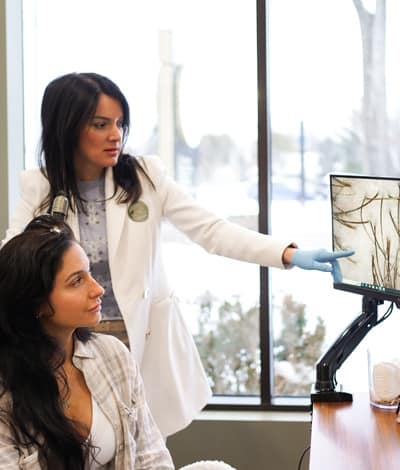
Polarized light microscopy provides an in-depth analysis of scalp and hair health.
It reveals key information about the hair growth cycle and the hair structure (diameter, follicle depth, sheath length, irregularities).
Hair loss can result from multiple factors. This advanced technology provides precise, reliable data to identify underlying causes and guide tailored recommendations.