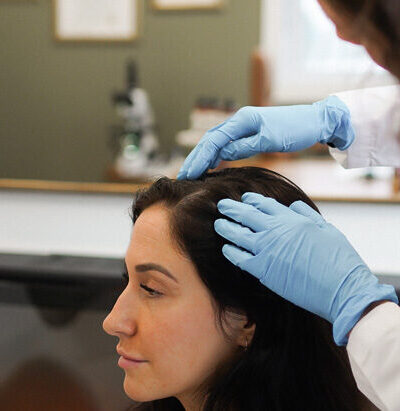
Every day, we lose an average of 50 to 100 hairs. Normally, these are replaced by new roots, but sometimes, for various reasons, this natural cycle is disrupted. Our certified trichologists are specialists in female hair loss. They will be able to determine the cause of the problem and offer you solutions adapted to your condition… because, yes, it is possible to slow down the process of hair loss in women and we are there to help you.

The Hair Life Cycle
Hair grows in successive cycles and is constantly renewed. A healthy hair has 10 to 15% of dead hair that is replaced by new developing hair bulbs. The life cycle of a woman’s hair ranges from four to seven years. It is therefore normal to lose between 50 and 100 hairs per day.
When Should you Consult
About eight out of ten women will experience hair loss or thinning during their lifetime. Hair loss can be temporary or permanent, depending on the cause. Does your hair seem thinner? Is your scalp now visible? Is your frontal hairline receding? Don’t worry, female pattern hair loss is not an irreversible phenomenon. Book an appointment with our experts for personalized hair care.
What Causes Hair Loss in Women
Androgenetic alopecia/female baldness
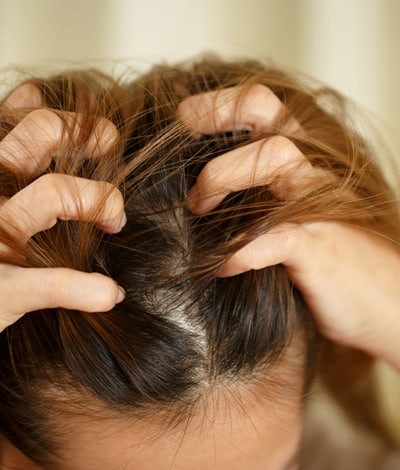
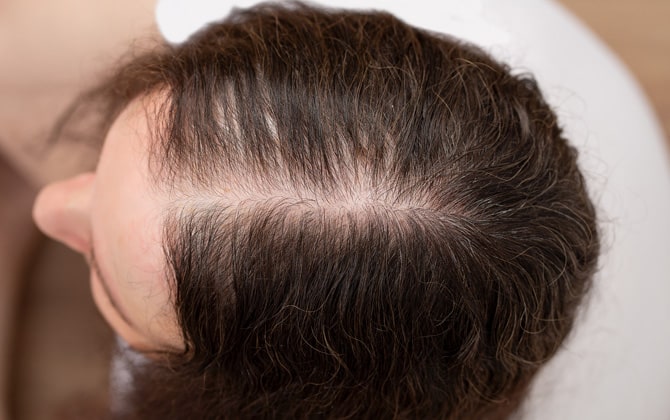
As with men, hair loss in women can be caused by genetic and hereditary factors.. Androgenetic alopecia affects about one in four women in their 60s. The hair becomes thinner and thinner, leaving the scalp visible on the top of the head, at the temples or at the tip of the head.
Alopecia areata
Alopecia areata is an autoimmune disease that causes hair loss in localized patches (bald spots). For some reason, although hereditary factors seem to be involved, immune system cells attack the hair follicles, causing them to fall out. Hair loss can be self-limiting and can occur as an isolated episode. It affects women, men and children alike.
Hormonal disorders
Hair loss is often observed following childbirth and during menopause.. During these periods, ovaries and adrenal glands produce more male hormones, which results in scalp thinning. The hair condition can also deteriorate during pregnancy.. Hormonal changes can also lead to thinning hair or thinning at the top of the head or at the temples. In all cases, the solution is hair care adapted to your needs.
Telogen effluvium
Telogen effluvium is a reactional phenomenon that results in hair loss in women or thinning of the hair. Several factors may be involved: an episode of emotional stress, a psycho-affective shock, a severe fever, an infection, an accident, etc. Hair loss is generally limited in time.
Hyperseborrhea (excess sebum)
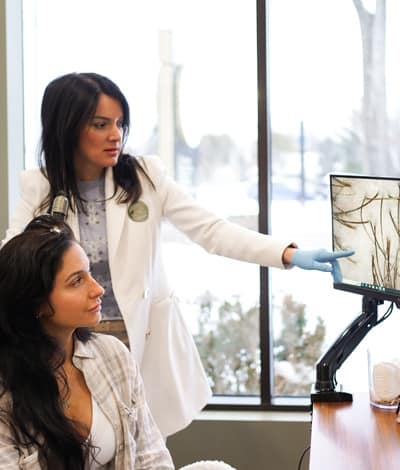
Sebum invades and surrounds the hair bulb, suffocating the hair and causing it to fall out. Without proper care, hair loss can be permanent. Excessive dandruff and/or excessive sweating can also interfere with the hair growth process or lead to hair loss due to asphyxiation. A microscopic analysis of your hair roots will allow us to detect hyperseborrhea and to propose effective solutions and products. We recommend, among other things, that you use a shampoo with a neutral pH. A scalp pH analysis is also offered at the center.
Medical treatments
All chemotherapy/radiotherapy and the use of some medications can cause hair loss. This is usually temporary and can be effectively covered by wearing a medical wig and/or Sibelle caps, hats and scarves with natural hair fringe. You can count on our team to accompany you as soon as the disease is announced and throughout your cancer treatments with soft, natural care adapted to your scalp. At Hair Health Center, consultations take place in private and in complete intimacy.
Stress
Stress affects our well-being and health in many ways. Hair is no exception. Stress keeps the stem cells of the hair follicle in a prolonged resting phase.. Unable to regenerate, hair thins and falls out. Stress can also lead to the graying of hair.
Dietary deficiencies
Iron, zinc and silicon deficiencies are directly associated with hair loss. Avoid strict diets and stay away from artificially sweetened foods that stimulate the sebaceous glands and can make hair greasy. A naturopathic consultation will provide you with an overall assessment of health factors and a personalized plan. Healthy eating habits are the key!
Harsh products and scalp deposits
Shampoos/conditioners, hair products and styling products containing aggressive substances can cause many scalp problems. Deposits accumulated on the scalp (silicone, paraben, polymer, copolymer, etc.) can also clog the hair follicles and prevent the hair from regenerating. At Hair Health Center, we work with soft and natural products that strengthen and promote hair growth. Contact us for your customized natural hair care protocol. Everything starts with a healthy scalp and avoiding the use of products.
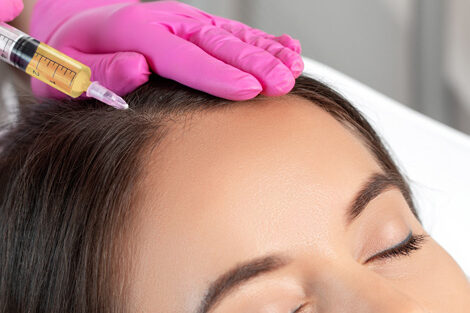
Hair Loss Solutions
Since 1976, the Hair Health Center has established itself as the leading hair clinic on the North Shore. Our approach is based on prevention, hair health and the balance of your hair cycle. Let our team of specialists in women hair loss and female pattern baldness guide you towards the most effective and efficient treatments and solutions.

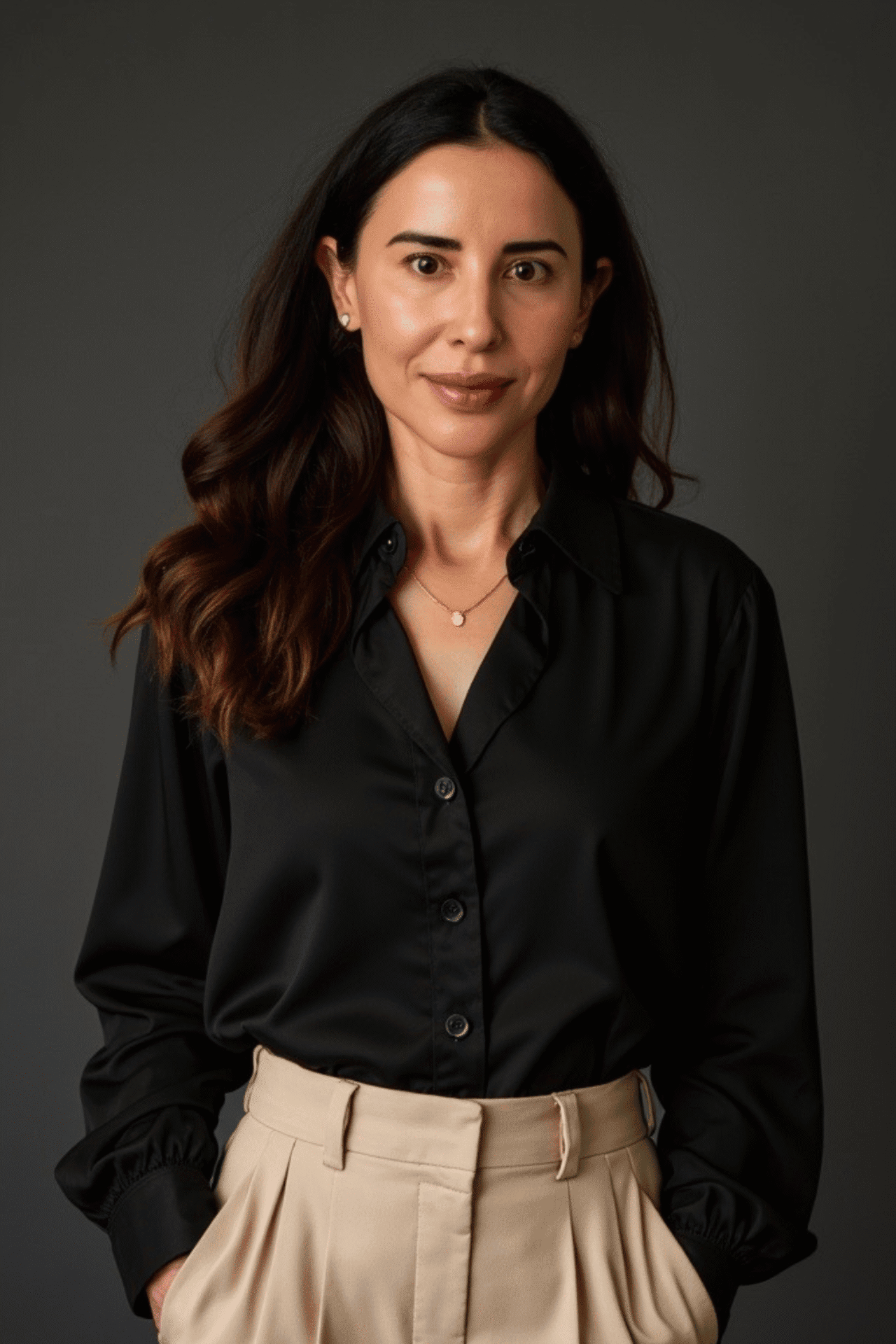
Under Medical Supervision
The Hair Health Center offers medical consultations for hair loss. PRP treatments and transplants are also supervised by Dr. Véronique G. Dorval and Dr. Jessica Chbat. The cost for a consultation is $350 + tax.
Female Hair Loss: Frequently Asked Questions
Can women experience baldness (alopecia)?
Yes, women can experience alopecia, including androgenetic alopecia, which is one of the most common types of female hair loss.
Unlike men, hair loss in women usually appears as diffuse thinning across the scalp, rather than defined bald spots. A professional hair and scalp analysis can help identify the cause and determine the best approach.
When should you be concerned about hair thinning in women?
If you notice increased hair shedding, a visible reduction in hair density or a widening part or thinner ponytail, it may be time to seek professional guidance.
Hair loss in women is very common, and you’re not alone. If it’s affecting your confidence or well-being, a consultation with a certified trichologist can provide clarity and reassurance.
Is postpartum hair loss normal?
Yes, postpartum hair loss is very common. After pregnancy, hormonal changes can trigger significant shedding.
While it may seem alarming, this type of hair loss is temporary in most cases.
How long does postpartum hair loss last?
Postpartum shedding typically lasts 3 to 6 months as your body gradually returns to hormonal balance.
Some women regain their natural hair density quickly, while others may benefit from targeted scalp treatments to support regrowth. Every situation is unique.
Can menopause cause hair loss in women?
Yes. Hormonal fluctuations during menopause can affect hair thickness, growth cycle, and overall hair quality.
This type of female hair loss is common, and there are solutions available to help support healthier, fuller-looking hair.
Does hair grow back after alopecia in women?
In many cases, hair regrowth is possible, especially when hair follicles are still active.
However, every situation is different. A personalized evaluation helps determine what is realistically achievable and which treatments can support regrowth or improve hair appearance.
How can you slow down hair loss in women?
The key is identifying the underlying cause of hair loss.
Depending on your condition, solutions may include scalp care treatments, follicle stimulation therapies and adjustments to your hair care routine.
A personalized consultation ensures a clear, tailored plan adapted to your needs.
What are the best hair loss treatments for women?
Several treatments can help support hair health and density, including gentle scalp care, stimulation therapies, PRP (Platelet-Rich Plasma), Alma TED treatment and mesotherapy for hair loss. Our specialists will guide you toward the most appropriate options based on your situation.
How can women hide or manage hair thinning?
For immediate results, options like hair toppers or wigs can provide a natural, confidence-boosting solution.
At Hair Health Center, consultations are always private, discreet, and pressure-free. We support you at your own pace.
Can hair dye make hair loss worse?
Some chemical dyes can irritate or weaken the scalp, especially if it’s already sensitive. Plant-based or mineral hair colour is often a gentler alternative and better tolerated. We can guide you toward safer options based on your scalp condition.
Do I need a hair and scalp analysis?
If you notice ongoing hair shedding, thinning hair or changes in texture or volume, a trichology consultation can help you better understand what’s happening and guide your next steps.
Who should you consult for female hair loss?
A certified trichologist is trained to assess hair and scalp conditions.At Hair Health Center, we offer a professional, compassionate approach, focused on understanding your reality and recommending solutions adapted to you.
Hair loss due to chemotherapy: what are your options?
Hair loss related to cancer treatments is common and can be emotionally challenging. We support women going through this experience with care, sensitivity, and discretion.
Options such as wigs, scarves and headwear (including Sibelle products) and hats can help restore comfort and confidence.
Our private consultations allow you to explore solutions in a calm, supportive environment.
What is polarized light microscopy in trichology?
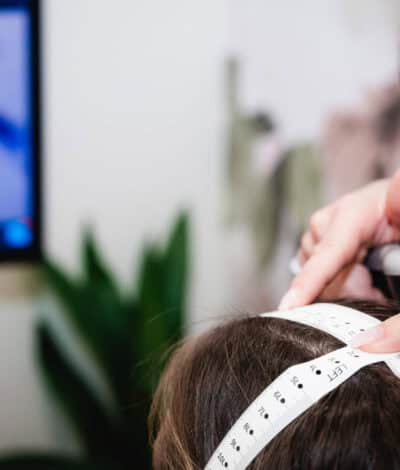
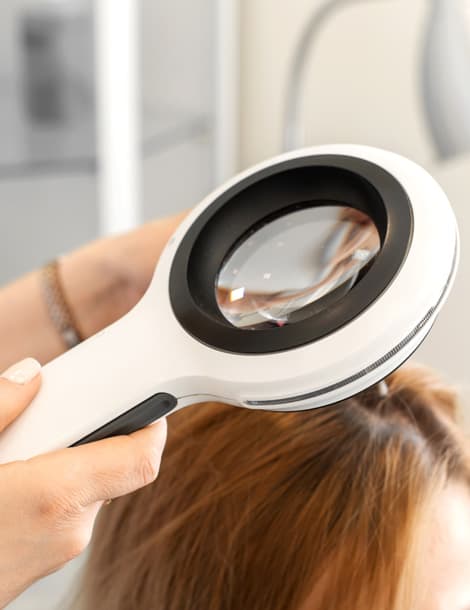
A polarized light trichogram is an advanced diagnostic tool used to analyze hair bulb quality, hair structure (diameter, follicle depth, sheath length, etc.) and the hair growth cycle. This technology provides precise, reliable data and can even confirm whether hair loss is truly occurring.
Female alopecia can result from multiple causes. This analysis helps identify the root issue and guide appropriate recommendations.